"The dark hours" of Patricia Aridjis
Photo of Patricia Aridjis (Via Zero Zone)
Interview by Jorge Tirzo
Interview by Jorge Tirzo
 Patricia Aridjis interested in "making the invisible visible" . She is one of the most committed photojournalists country's social issues. Thus is the reality show that not everyone can see. recently won the Fernando Benítez Cultural Journalism for his work "The disease of each flower" on the use of illegal pesticides.
 "black hours" is by far the most important project of his career. Patricia spent seven years living with women who inhabit the prisons of the Federal District. His work was not only shooting but also to share the dark hours of the closure.
"When I started this job, "says Patricia, what struck me most was seeing the children there with their mothers. Then I thought about doing something about motherhood, but as I visited the prison that I realized it was a whole universe. There were many stories to tell ... "
Imprisonment as a mother
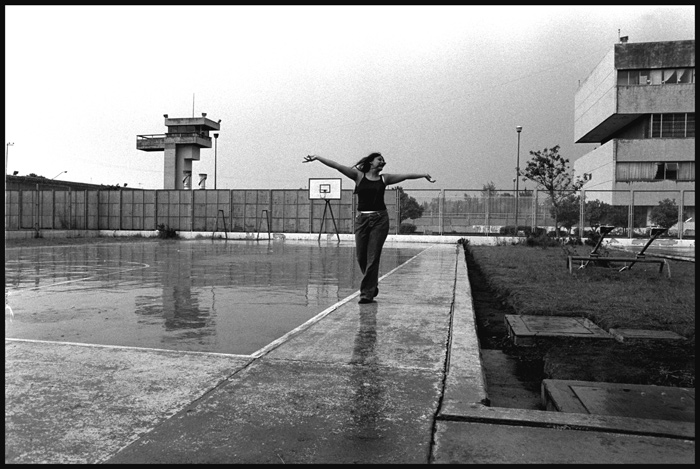
Patricia sought to learn these experiences from within. Shoulder to shoulder was revealing the intimacy of these women lost because "privacy in prison is a very public" .
"I think many of them feel better inside than outside. It is a paradox, but I reached that conclusion because there are high rates of recidivism. I have concluded that l to jail is like a large uterus, where women find shelter and a rival family. Outside feel lost because there is no alternative employment, many have lived in the street or from dysfunctional families where there has been abuse. "
" It's not that they feel good inside, but they represent a kind of shelter. Maybe not the best mother's uterus, but it allows them to feel safe and free in that sense ... ", Patricia said when talking about one of his photographs. That where a woman extends her arms inside the prison, as if trying to fly.
She saw many women enter and exit a few. A few even saw them re-enter. Of pregnant women known to have already had their children, but for AIDS patients do not know anything. "So much work has taken me drop this project," says a little sad.
A book to get out of prison
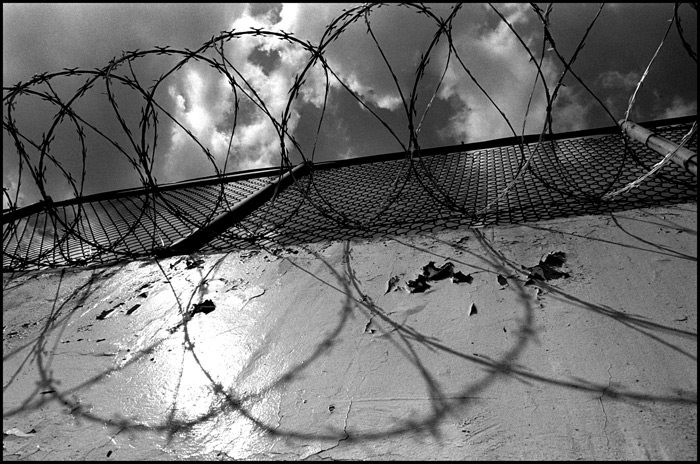
's book "The black hours" includes not only photographs taken by Aridjis. It is a joint effort with all those women "whose only way out of prison is to through the book. "
"The book's foreword was written by Sara Aldrete, who is one of the inmates who have more in prison and has won several literary competitions. I had the interest that they see the pictures and tell me what they thought to see them. Because you make more visits I'm not living in the flesh prison. "
"One day I had that possibility. The prison director asked me to make a presentation. For me it was important that they participate. The internal images appearing on something written beside each picture. They wrote about their feelings in prison or what inspired them the picture they were seeing. Not only was my vision of the prison from eyes that go into the street and back, but was the view from inside. why many of these texts include them in the book. "
" black hours "at the Tecnológico de Monterrey
16 to February 20, 2009, Patricia Aridjis present his photo essay" The black hours "and his book titled at Tecnológico de Monterrey, Campus Mexico City. The opening will
on February 16 at 14:30 in the 1st floor of CEDETEC and the presentation of the book at 15:30 in Aula Magna 9.
This event is organized as part of the celebrations of the tenth anniversary of the L icenciatura in Journalism and Media (LMI) and Cultural Diffusion Department.
![Reblog this post [with Zemanta]](https://lh3.googleusercontent.com/blogger_img_proxy/AEn0k_vP_J691hDcBWtDL3TA1pGZn0Y_4E8fcR7kUHhGXeigtrJ56tb-YWZMd0sTzPTwwUpF14esXLAsVMiFQWcpuOxebj7RfjfxTLwQiPvTQgxELNIwxzAEAkp07VpCcq8YjCXWPr4tc-z73W1JL5FtS1Y1=s0-d)


0 comments:
Post a Comment